An 8-Year IUD, a President’s Rejection — and the Question of Consent
By Mikey San — 12 August 2025

Something about the line “Namibia’s President has firmly rejected…” made me stop scrolling and actually read. It wasn’t the politics. It wasn’t the drama. It was the tone — the tone of a country refusing, politely but firmly, to be used as someone else’s test case.
On 11–12 August 2025 an X post from African Hub flagged a statement by Namibia’s President, Netumbo Nandi-Ndaitwah, rejecting a proposal to trial an eight-year hormonal IUD. Regional outlets picked it up quickly — The Maravi Post ran a piece the same day outlining the President’s concerns.
If the device lasts eight years, isn’t that a net good? On paper, long-acting contraception that reliably prevents unplanned pregnancy seems like a clear win. The Bill & Melinda Gates Foundation has been a major funder of women’s health initiatives and has backed work on long-acting contraceptives.
But Namibia’s “no” matters for reasons that aren’t captured by an headlines-only view.
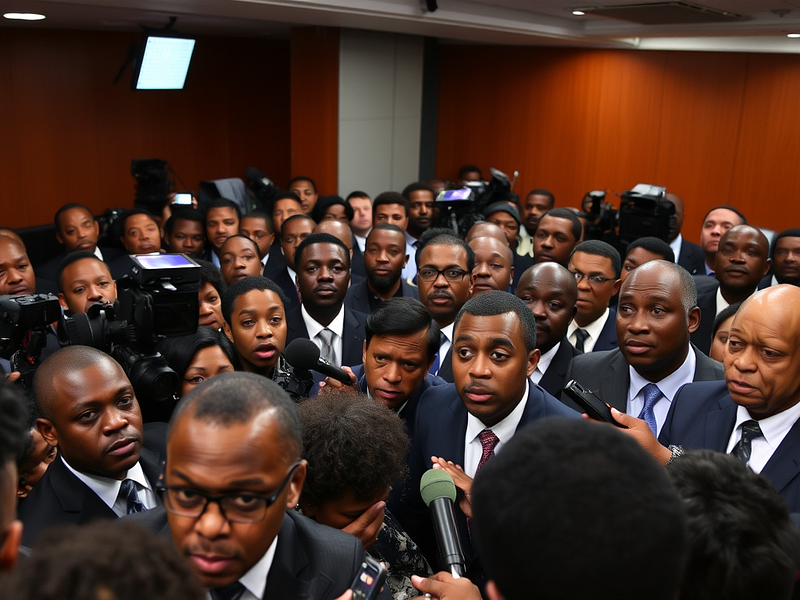
There’s a long, uncomfortable shadow over research conducted by or for wealthier actors in lower-income countries. Historical abuses — experiments done without genuine consent, unequal power dynamics, the presumption that poorer nations are convenient testbeds — linger in public memory. That history makes any proposal to trial reproductive technologies in Africa inherently sensitive. The first question should always be: who designs the study, who gives consent, and who benefits?
This is not a rejection of science. It’s a demand that scientific research follow rights-based, locally-led processes. Trials with human participants — especially for interventions that affect bodies and reproduction — must be transparent, ethical and led in partnership with local health authorities.
Quick note on evidence: devices sometimes show different profiles across populations. Implementation studies introducing the hormonal IUD in sub-Saharan Africa have reported varying continuation rates and changes to bleeding patterns — practical reminders that early trial data don’t always translate directly to diverse real-world settings.
Beyond ethics and evidence, there’s a media question. The story has had clear traction across African social channels and regional outlets, yet — at the time of writing — it hasn’t sparked the equivalent coverage across several major Western newsrooms. That matters. Who reports a story shapes how it’s framed. If the narrative is carried only by external actors, we risk losing vital local nuance and the right of a nation to explain itself in its own voice.

So what would good practice look like if a trial were to be considered?
First, the protocol must be transparent. Communities should see the plan, not an abstracted press release. Local ethics boards and national health authorities must be co-designers from the outset.
Second, informed consent needs to be real, not procedural. That means information in local languages, time for questions, and consent processes that respect local context — not a signed form handed over as a box-ticking exercise.
Third, benefits must be tangible and lasting for the host country. Will local clinics gain training? Will researchers be co-authors and co-decision makers? If a trial simply collects data and moves on, it’s extraction, not partnership.
I’m not painting the Gates Foundation as a villain. Large investments in women’s health address genuine gaps; the Foundation’s recent commitments to improve contraceptive options are a response to real needs. But money alone doesn’t absolve funders of ethical obligations — if anything, it raises them.
What can those of us outside Namibia do?
Share the regional reporting. Follow and amplify reputable African outlets covering the story. Ask your paper or local journalist why the Namibian voice hasn’t been centre stage. And, if you care about global health ethics, push for trials that are locally led, transparent and accountable.
For editors and journalists: a country’s refusal to be a testing ground is a significant story in its own right. Treat it as such.
For researchers and funders: ask the uncomfortable questions Namibia raised. Did local communities ask for this trial? Are we sure consent will be genuine? Who will hold international partners to account?
There are no easy answers. Contraceptive innovation can be life-changing. But innovation without respect — without local leadership, without informed consent, without clear benefit for host communities — is not ethical. Namibia’s decision is a reminder that progress without people at the centre isn’t progress at all.
If this landed with you, please do two things: read the local reporting linked below, and share this post with the tag #NamibiaSaysNo. Help make sure the conversation includes the voices closest to the issue.
Sources & further reading
African Hub — original X post Maravi Post — report on Namibia’s rejection Reuters — background on Gates Foundation women’s health funding Business Insider Africa — contraceptive rollout coverage Rademacher K. H. et al., GHSP (2022) — implementation and early experiences of the hormonal IUD in sub-Saharan Africa (peer-reviewed)
Published by Mikey San
Originally published at http://whoismikey.uk on August 12, 2025.